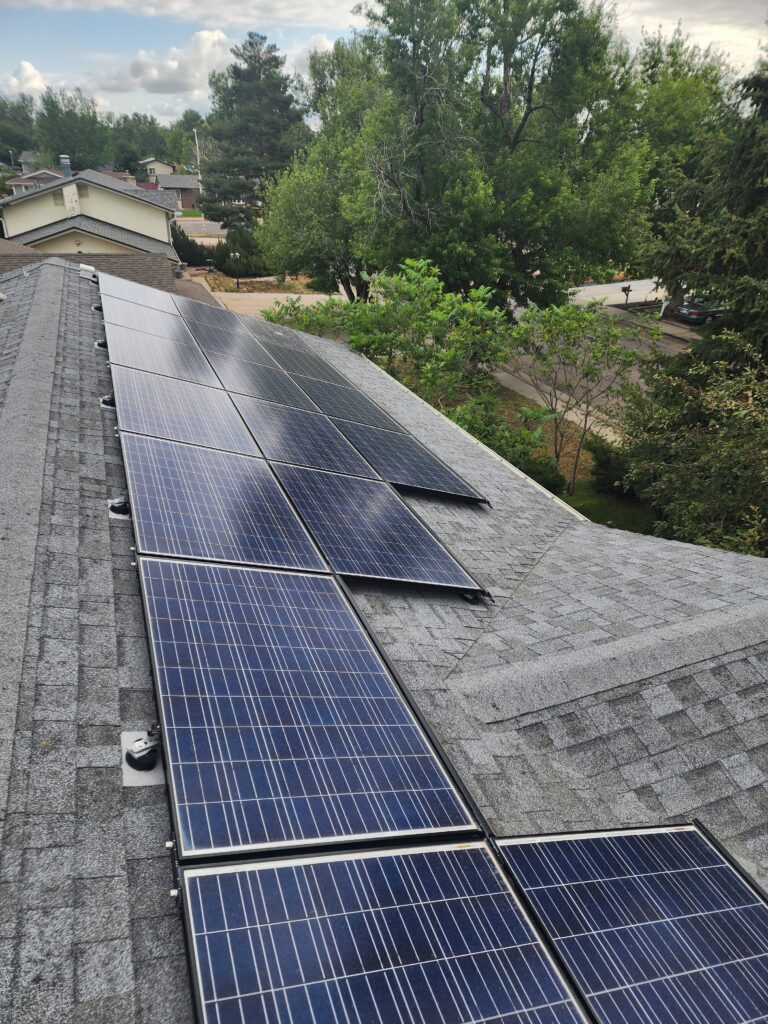

Quick Answer: A powerful severe storm tore across the Denver metro on the afternoon of June 8, 2026, dropping large hail and producing wind gusts along a corridor stretching from Jefferson County through Douglas and Elbert counties. Confirmed reports place the hardest hail from Lakewood and Arvada east through Castle Rock and The Pinery. If your home was in this path, your roof, gutters, siding, and solar panels likely took a direct hit. Your date of loss is June 8, 2026. Get a free professional inspection from Elite Roofing & Solar before you call your insurance company.
Think your roof may have been hit by the June 8 Denver hail storm?
Get a real-time roof replacement estimate or schedule a professional inspection by the local Denver roofing experts at Elite Roofing & Solar to check for hail, wind, and hidden exterior damage.
What Happened on June 8?
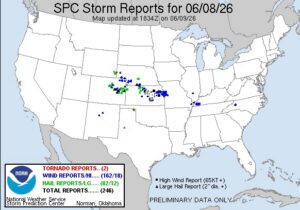
On the afternoon of June 8, 2026, a severe storm system developed rapidly along Colorado’s Front Range and tracked east-southeast across the Denver metro. The storm produced a dangerous combination of large hail, extreme winds, and localized flooding.
Even if a neighborhood did not see the worst of the storm, homes nearby may still have experienced roof or exterior impacts. That is why a ground-level visual check and follow-up inspection are both important after a severe weather event.
Which Neighborhoods Were Impacted?
The hail corridor was wide. Based on local storm reports, these areas were impacted by the storms and are at high risk for roof and exterior damage:
- Lakewood
- Arvada
- Wheat Ridge
- Denver (west and south Denver especially)
- Englewood
- Aurora
- Commerce City
- Douglas County
- Castle Rock
- Parker
- The Pinery
- Lone Tree
- Highlands Ranch
- Ponderosa Park
- Franktown
- Elizabeth-area communities
Why Hail Size Matters

Hail size matters because the larger the hail, the more likely it is to damage roofing materials and other exterior surfaces. Smaller hail may leave only cosmetic marks, while larger hail can bruise shingles, dent metal components, crack siding, and damage windows or solar panels.
The exact threshold for damage depends on roof age, material type, slope, and storm velocity. The 1-inch mark is where hail damage on asphalt shingles begins to take damage.
At 2-3 inches, you are looking at a completely different level of destruction:
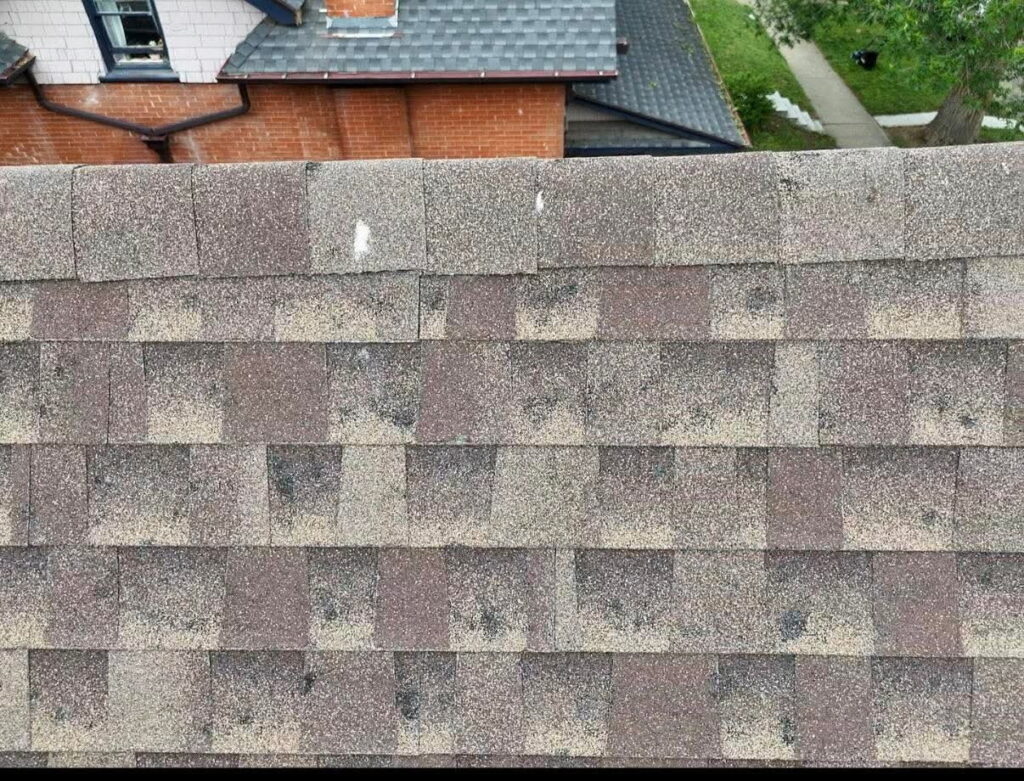
- Asphalt shingles — Granule loss is severe, fiberglass mats are fractured, and many shingles will have visible impact craters. Full replacement is likely, not repair.
- Metal roofing — Significant cosmetic denting and potential functional damage at panel seams and ridges.
- Tile roofing — Concrete and clay tiles can crack through entirely at 3 inches.
- Gutters and downspouts — Deep dimpling throughout; many sections may need full replacement.
- Siding — Vinyl and wood siding show visible bruising, cracking, and perforation.
- Windows and skylights — Screen damage is nearly universal; frame and glass damage is possible.
- Solar panels — See the dedicated section below.
You may also have wind damage layered on top of hail damage, lifted shingles, torn flashings, and displaced ridge caps are common.
A roof inspection is the only reliable way to determine whether hail caused functional damage or cosmetic impact only.
What About My Solar Panels?
This is a question most roofing companies can’t fully answer, but Elite Roofing & Solar can.
Solar panels are designed and tested to withstand hail, but 2-3-inch hail at high velocity exceeds the impact rating of most residential panels. Here’s what to check:
Visible damage signs:
- Cracked or shattered tempered glass on the panel face
- Micro-cracks (not always visible to the naked eye, but cause power output drops)
- Damaged mounting hardware or racking
- Loose or disconnected wiring at junction boxes
Output drop: Even if your panels look intact, internal micro-cracks from impact can reduce power generation by 10–30% without obvious external signs. After a storm like June 8, pull your inverter’s app or monitoring dashboard and compare your current output to pre-storm baselines.
What to do:
- Do not attempt to inspect panels yourself; wet panels on a potentially damaged roof are dangerous.
- Document your system’s current output reading.
- Schedule a combined roof + solar inspection so both are assessed together for your insurance claim.
Elite Roofing & Solar is one of the few local contractors who can inspect and document both your roof and your solar system in a single visit, with a single report for your insurer.
Your 5-Step Action Plan Right Now
Step 1: Write down your date of loss
June 8, 2026. You’ll need this for your insurance claim. Review your individual policy for claim reporting deadlines, as requirements vary by carrier. But don’t wait, insurance companies can become overwhelmed with claims after major storms, and response times slow significantly.
Step 2: Check soft metals from the ground
Before climbing on anything, walk your property and look for:
- Dents and dimples on gutters, downspouts, and fascia
- Damage to your air conditioner fins or condenser unit
- Damaged window screens
- Granule buildup at the base of your downspouts (a strong sign shingles took hits)
- Dented or cracked mailbox, patio furniture, or vehicles
If soft metals are dented, your roof almost certainly has damage too.
Step 3: Document everything
Take photos and video of any visible exterior damage before anything is repaired or cleaned up. This documentation supports your claim.
Step 4: Get a free professional inspection before you call your insurer
Some insurers may document inquiries regarding storm damage even if a claim is not ultimately paid. A professional inspection can help homeowners determine whether filing a claim is appropriate.
Step 5: File your claim with professional support
If inspection confirms storm-related coverage, we’ll provide documentation of our findings and coordinate directly with you throughout the roof repair or roof replacement process. We can meet with your adjuster to answer questions about the scope of work and observed damage.
Read more in this blog about hail damage-related storm claims.
RCV vs. ACV: Know Your Coverage Before You File
Replacement Cost Value (RCV): Your insurer pays the full cost to replace your roof with a new one of like kind and quality, minus your deductible. Most preferred coverage type for homeowners.
Actual Cash Value (ACV): Your insurer pays the depreciated value of your existing roof, accounting for age and wear. On a 15-year-old roof, this could mean a payout significantly lower than your actual replacement cost.
Check your policy declarations page before filing. If you have ACV coverage, the gap between your payout and actual replacement cost is called “depreciation holdback”; you pay that portion out of pocket.
What to Watch Out For: Storm Chasers and Scam Contractors
After every major hail event, out-of-state contractors flood the Denver metro. Watch for these red flags:
- 🚩 Knocks on your door within hours of the storm — legitimate local contractors don’t have to chase work
- 🚩 Pressure to sign a contract immediately — a trustworthy roofer gives you time to decide
- 🚩 Offers to waive or cover your deductible — this is illegal in Colorado under C.R.S. § 6-22-105
- 🚩 Requests for a large upfront deposit — never pay more than a small materials deposit before work begins
- 🚩 No local address or verifiable license — check the Colorado Department of Regulatory Agencies (DORA) contractor lookup
Always ask for a contractor’s Colorado roofing contractor license number, proof of general liability insurance, and workers’ compensation certificate before signing anything.
2026 Roof Replacement Cost Guide for Denver Metro
If the storm did cause roof damage, replacement costs will depend on roof size, pitch, material, and complexity. Many homeowners want a quick estimate before speaking with insurance or choosing a repair path.
Here is a simple planning guide:
- Asphalt shingles: Lower cost entry point, usually the most common replacement option.
- Impact-resistant shingles: Higher upfront cost, but better long-term hail resistance.
- Metal roofing: Higher material and labor costs, often chosen for durability.
- Tile or synthetic systems: Typically more expensive and more complex to replace.
Not sure where to start? We’ve got you covered with our free online instant roof quote to see what a new roof might cost. Or schedule a free roof inspection with our local roofing experts to provide you with the next steps or peace of mind.
Should You Upgrade to a Class 4 Impact-Resistant Roof?
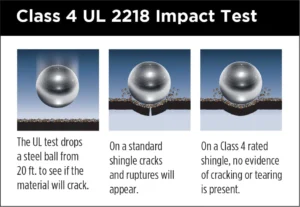
Colorado’s Front Range, especially the Palmer Divide corridor through Douglas and Elbert counties, is one of the most hail-active regions in the United States. Class 4 IR shingles are tested to the highest impact resistance standard (UL 2218) and are designed to withstand significant hail without cracking.
Benefits of Class 4 for Colorado homeowners:
- Reduced risk of future hail damage
- Many Colorado insurance carriers offer a premium discount (often 20–30%) for Class 4 roofs. Ask your agent
- Stronger manufacturer warranties
- Better long-term value on a home in a hail-prone area
If your insurer is paying to replace your roof anyway, upgrading to a Class 4 system at the time of replacement is one of the smartest financial decisions you can make as a Colorado homeowner.
Why Elite Roofing & Solar?
We’re not storm chasers. We’re your local Denver neighbors.
Elite Roofing & Solar has served the Denver metro for years, and we’ll be here long after the out-of-state crews pack up and leave. We handle roofing and solar together — the only call you need to make after a storm like June 8.
- Free, no-pressure roof and solar inspections ✅
- Licensed, insured, and locally accountable ✅
- Insurance claim documentation support ✅
- Class 4 and impact-resistant options available ✅
- We’ll be present at your adjuster inspection ✅
Schedule Your Free Storm Inspection Today
Don’t wait. Storm damage claims take longer the longer you wait, and the adjustment process in the Denver metro will slow down as thousands of homeowners file simultaneously.
🌐 Schedule online
📍 Serving: Denver, Lakewood, Arvada, Castle Rock, Parker, The Pinery, Highlands Ranch, and the entire Front Range
Your date of loss is June 8, 2026. Write it down and contact us today.
Elite Roofing & Solar | Licensed Colorado Roofing Contractor | Serving the Denver Metro
*Note: Elite Roofing & Solar is not a public adjuster and does not act as one when working on our clients’ behalf. This blog is intended for educational purposes.